
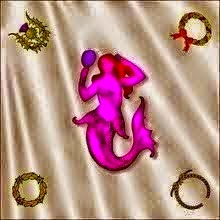


 To preserve the civil peace in Monte-Cristo, the first POPP carefully edicted his rules of succession. As soon as elected, the new Prince Ovationne President par le Peuple chooses his (or her) successor. He can then change his heir at any time, but his new choice, as the initial one, must be immediately validated by a popular vote (in Monte-Cristo women enjoy the same civic rights as men). Additionally the designated heir has to be officially confirmed annually, both by the ruling POPP and next week by the citizens.
 As yet, each successor happened to be chosen within the current ruler’s family –once a sister, among sons otherwise. No theoretical discrimination is set between sons and daughters, legitimate or illegitimate children. Indeed nothing in the written or unwritten rules of succession restricts the choice in any way. It is only required from the chosen individual to be quite good-looking, of pleasant company, of a cheerful yet quiet nature, with remarkable intellectual qualities and with a proven attachment to the *peaceful* Presipality and its traditions. From a very ancient local folktale des Entommeures took the formula 'Without jealousy, without fear, without meanness', now mentioned as 'the traditional triple prerequisite'. No reference is made to any familial relationship; anyway, given the extraordinary…
  popularity of the successive POPPs (#), every Monte-Cristan family is now of presipapal blood. Note that, to suppress an excessive consanguinity, children born from a Monte-Cristan mother and an unknown father are automatically given Monte-Cristan nationality, even if of black skin or scandinavian yellow hair (such things happen and nobody bothers to comment).
As soon as designed the Heir Apparent is associated with the affairs of State, and trains daily with Veuveuse and Etripiere, the POPP's blades of office.


 the two Monte-Cristan Secret (officially non-existent) Agencies with the respect of this clause: their more binding secret oaths being ultimately to the *function* of Elected Prince -as the embodiment of the Presipality, its population and its values- rather than to the *person* of the current ruler. As
 ----
*: from Helie de Saint Marc, the first commander of the Gardes, to whom des Entommeures, 'just in case', dictated the now ritual expression.

 This annual popular confirmation of the Heir Apparent is actually the pretext for one of the
  Cristan calendar.
 In order to make indubitable the total indifference of the State toward religious matters, Monte-Cristo abides joyfully to all the Christian holidays, including some barely canonic (at least as a reason to cease working) such as the Epiphany (when each household draws lots for its 'King' with a feve concealed in a special cake) also known as Jour de Lumiere and Depart des Meres, Candelmass (with its pancakes, but very 'pagan' with many features of Imbolc still vivacious) known here as Jour de Bregida, Mardi-Gras (two days, but the five previous ones are devoted to the preparations),
  Orthodox Maslenitsa complete with blinchiki, kostroma and bonfire, Dimenche di Rampau (in each commune a bearded man riding a donkey hands out to children feathered false branches with candies instead of fruits) then Easter Monday (Lundi des Oeufs), the Assumption on august 15 here called 'Fête de la Lune' and associated instead to a female 'protective spirit' and the moon [for some reason rooted in the wandering past of the Compagnie Noire, the associated beverage is a peculiar juniper berries-flavored spirit, Peket], the Advent (on nov. 15 here) and St-Nicolas (children receive books and pictures, and prepare the wheat seeds of Calendau - XMas). But also to the Tou Bi Chevate, Pourim and Yom Kippour (marked only
  by the consumption of traditional Moroccan Sepharadim meals), as well as to the Id al-Fitr (Los Brescos Morous -but not the Aïd-el-Kebir because of its bloody nature). The night following the first wednesday of may is dedicated to 'The Little Folk (or 'Children') of the Night': saucers of honeyed milk and tiny bits of cake are placed on thresholds at dusk; if the moon happens to be full everybody stays indoors except for a few watchers
  wearing special amulets and nobody stops singing and dancing before dawn. The traditional popular feasts (often recycled by Christianity) are not neglected either: Imbolc (Candelmass, known here as Jour de Bregida {Bridget}: girls and women do a thorough washing 'to wash away the ashes of the Winter Crone', drink honeyed kefir while doing small straw crosses and at night dance with torches around bonfires; for the men it's only the day of the blacksmiths, though all enjoy the pancakes), Yule for the Winter Solstice, Beltaine -marking l'entrada del temps clar (festivities starting on april 29 at dusk to prepare for the Walpurgis Night) -on may 1, following the French tradition, all Monte-Cristans exchange sprigs of lily-of-the-valley, Lugnasad, and Samain
  (feasted on two days like the Christian holiday, La Communion and Le Jour des Pauvres Morts, with an Halloween-like night between; the second day is also known as the Day of 'The Mother of Tears', also referred to as 'The Third Mother', though no Monte-Cristan would dare to argue with a foreigner about the other two), all under another name, generally that of the corresponding Christian Saint or feast. All feasts are devoid of overt religious content, though the underlying messages of charity / solidarity/ fraternity / peace / love and understanding are remembered. They are
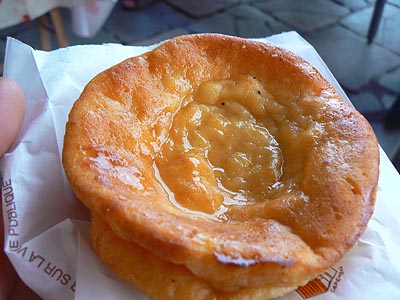
  basically annual opportunities to enjoy special cooking recipes, songs and other merry traditions. Each equinox and solstice is also an official holiday -a continuous series of 12 festive days runs from dec. 21 to jan. 1st, actually lasting to jan. 13! Are also among the traditional festive days are Le Rangement (seven day after 'The Kings' and the poumpo di rei and concluding the festivals of the changing of the year) and Les Bugnes (a tradition from Lyons -maybe a reminiscence of Candlemas under the Julian calendar?) in february or
  march, 4 days after Mardi-Gras. March 15 is the boisterous, popular, well washed-down day of (oddly?) the 'April Queen', the 'Joyful Queen in / of Love': on this day girls and women have officially precedence over men -though most men grumble (with a smile) that it's the same every day of the year. March 19th, in the Christian calendar the day of St Joseph, patron saint of cuckolds, is only the day of inflicting practical jokes / pranks of our april 1st kind to strangers not yet fully integrated -and of consuming crema catalana and torro; the last monday of april is the mariage des roses; may 1st is 'Lily of the valley Day' and when cherries reappear on tables the first saturday is Le Temps des Cerises; may 13 is the Jour dei Boumians, the welcoming of Gypsies on their way to the Santei Marias de la Mar in Kamarg to honor their Saint Patron Sara e Kali; on the Eve of june 22 great bonfires are lit and the whole night is devoted to music and dances for the summer solstice; on june 25 Les Chivau Frus (= 'Sant Aloi d'Estieu', St Eloi d'Ete) also serves to feast the horses and goldsmiths and entomologists;
 members of the Black Company and, it is whispered, by the Gardes de l'Etrier; in late summer and early autumn Le Four ('the Owen': first use of the flour from the new harvests), Los Amelos (harvest of mature almonds), Le Pressoir ('the Wine Press', end of grape harvest), La Presse ('the Olive press', with the new oil), Le Lavoir (new lavender oil), later Uberto (the feast of dogs) on november 3rd, Les Lumieres (Sainte Lucie on december 13, when the girls having reached puberty in the year wear a crown of candles (oddly not counted in the festival preparing the turning of the year -certainly from a cultural tradition alien to that of the Calendau of Provence)... Francois des Entommeures added La Fete des Ecoliers (on jan. 28 -St Charlemagne- when schoolboys and -girls receive books among various gifts and children close to coming to age their first writing kit: Monte-Cristans are now proud of their literacy) and the Souvenir de Giordano Bruno (on february 17), the Souvenir d'Hypatie d'Alexandrie
  (on march 12) and the Souvenir de Guillaume d'Occam (on april 9), holding all three to be Martyrs to Reason; his successor added the Souvenir de Lucilio Vanini (on february 9), sure as it was that des Entommeures would have done it. Louys added may 15 as the Jour-Denise in loving remembrance of his first wife (05.15."8 comment). To each of these feasts is attached a special delicacy (or a whole set of!), also often a cocktail and, for the poetry, a peculiar plant - and several songs. While it is unseemly to enjoy a meal attached to a given festive day before the fixed date (except on the day of St. Sulfond, when all known meals can be enjoyed) this is perfectly permissible later in the year: thus as autumn becomes late, the choice of delicacies one can ask for increases sumptuously. Many visitors appreciate this as a compensation for the less and less glorious weather -and the clothes young
  Monte-Cristans now begin to wear. Besides, this traditional restriction is in reference to the 'old' calendar ('fossilized' in the suffixes of september to december) having the year beginning on march 1st: thus the many delicacies of the Calendau period can be enjoyed during most of winter (the components of the 13 desserts are individually available all the year round).

 Significantly the three ‘military days’ of the Presipality (Saint George {Day of the Gardes}, Saint Michel {the Warrior Archangel} and Sainte Barbe {Day of the Carabiniers}) are *not* official holidays. Yet, everybody ceases working to applaud the parades and semi-military concerts – then drinks to the health and welfare of the Uniformed.
While not official holidays, during the annual festival of baroque music which 'invades' the streets nobody except the innkeepers works much in the town of Monte-Cristo.


 The annual confirmation of the designated heir takes place on day of Saint-Jean, June 23 (this day is unofficially the Monte-Cristan national festival, following the feast of the summer solstice without resumption of work: the second christian name of the Founder of present Monte-Cristo was Jean, and on the day of Saint-Francois weather may be less pleasant. Furthermore,
"Voyageur partant pour la Suisse,
Je t'en prie fais bien attention!
Pour eviter La Chaudefond
Il faut passer par Saint-Sulpice."]).
Je t'en prie fais bien attention!
Pour eviter La Chaudefond
Il faut passer par Saint-Sulpice."]).

The day begins *not too early* (so much the more as it's among the longest days of the year, and will be heavily busy) by a demonstration of the Carabiniers Band at its full strength of now 399, playing joyful non-military tunes. The Prince-President, at the head of his Gardes de l'Etrier, listens stoically in his cumbersome n°1+ uniform, straight on his 'traditionally decorated' white stallion.
 Despite the officially serious nature of the event, the national temperament, as would be expected, makes it one of the two (with Mardi-Gras) hottest feasts of the year. In each and every home the pastry of the day: 'Sulfamides', a
  -corresponding to the [taboulin drum - vombard shawn - biniou kozh bagpipe] trio of Brittany- perfom in all squares for
  improvised groups of dancers; in the Grand Parc Recreatif the 'sleeve' puppet Guignol and his accomplices from Lyons play satirical fabliaus. Elsewhere string puppets tell the ribald adventures of Salace & Grossebite.
 At each corner improvised stalls
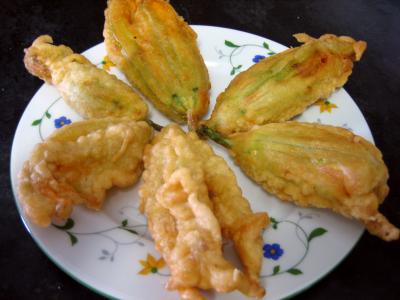
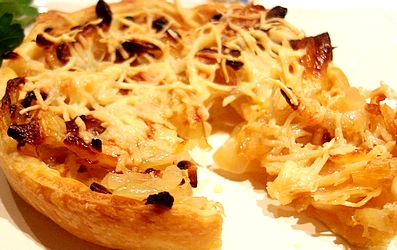
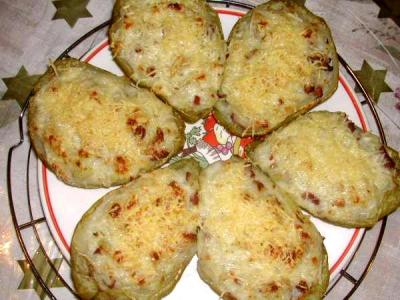
  mayonnaise and black olives on card plates, merlusso a la raito (cod in caper sauce), cod accras, estocafic a la nissarda, fish creole broth, portions of oursinado (sea urchins cream), vioulet (biju), scampis flambes a l'anis, risotto de gambas, crab matoutous, grilled crayfish in sauce chien, tielle de calamar, civie de supi, fair style octopus (pulpo a galega), arros negre amb sepia, stuffed mussels, mussel-fries in card cornets (the Compagnie Noire had fought in Flanders), fromage de tete, pate en croute, chaussons à la viande, une escalope sur une belle salade parisienne, nioupette (a delicious frisee aux lardons or au magret de canard), amateur mini-lunch "1 entree - 1 plat - 1 dessert et le tout de mon cru" trays, tourte aux cailles, Cabri au lait (too few calves in Monte-Cristo), very diverse tapas and maize tacos,
 burritos, chimichangas, fajitas, rolls of fougasse aux olives, escabeche of pilchards, bowls of boui-abaisso (bouillabaisse), aigo boulido, bourrido, soupo de favouio (crab soup) and soupe de limaçons au pistou, cargols (snails) a la llauna, cold gaspacho and hot giraumon soup, dozens of snails in garlic butter, complex plates of aïoli (with snails again, and cod), couscous and paella, thick tartines of brandade de morue on garlic-rubbed quintes de fougasse, pieds-paquets, caillette, crespeou, duck fritons, petit sale with lentils, endive with ham, tripoux, espalo d'agneu farcido, hare in aspic, rabbit de Provence au pistou, rabbit with rum and prunes, bull stew from Kamarg (a Gardian recipe), stuffed quails, chicken colombo, partridge a la Catalane, paires de cailles qui boulottent, ris de veau aux morilles, jambon a la creme et au madere, chili con carne with red beans,
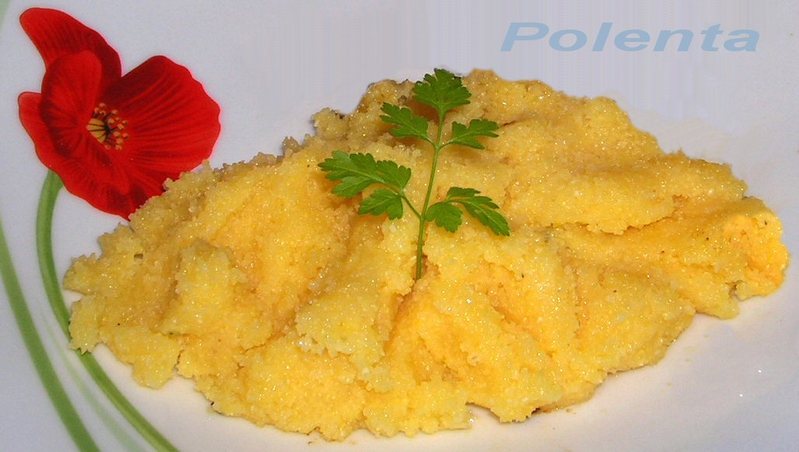
  ossobuco in bianco or rosso, various 'Moroccan' tajines (chicken, fish & cuttlefish, kid, partridge, pigeon...), rolitos, botifarras with samfaina, the two kinds of godivots (sausage and veal quenelles) in red wine and diots or saucisse de Morteau in white wine, hot boar chorizo with polenta or semolino, merguez sausages, slices of blanc jésus and bisbe noir, cold langue (tongue) en gelee, hot tongue in caper sauce, rognons (kidneys) au madere, andouillettes, pasta alla puttanesca, various ravioli, tahzbanines, chicken liver cake, galettes de sarrasin (buckweat pancakes) with fried onions or 'complete', croque-monsieurs, portions of the innumerable variants of tians, generally flavoured with farigoulette (local thyme) or basted with home-made liqueur de farigoulette: of vegetables only, enriched with goat cheese, the peculiar tian de cardons a la moelle, but also meat-based ones such as kid, and even desserts; brochettes of liver and gizzard or lobster and octopus tentacles
 with panisses de l'Estaque of chickpea flour or polenta of crushed chestnut (or, that novelty, cornmeal), cold gougeres (cheese, minced kid or pigeon, chopped mushrooms), kid's brain with caper, lampredotto, rigatoni alla pajata, stuffed tortillas, slices of cold andouillette and andouille, quenelles Tante Alice, tripes en tablier de sapeur,
 dishes of grattons, cuisses de grenouille a l'ail, cuisses de grenouille a la creme with mushrooms, bowls of cervelle de canut, helpings of matefin (a very thick pancake) aux pommes with whipped cream -seven recipes the Black Company added to its culinary tradition when passing through Lyons in its journey Southward, of omelette sur rapee de Saint-Etienne, of tian de cougourdo, of
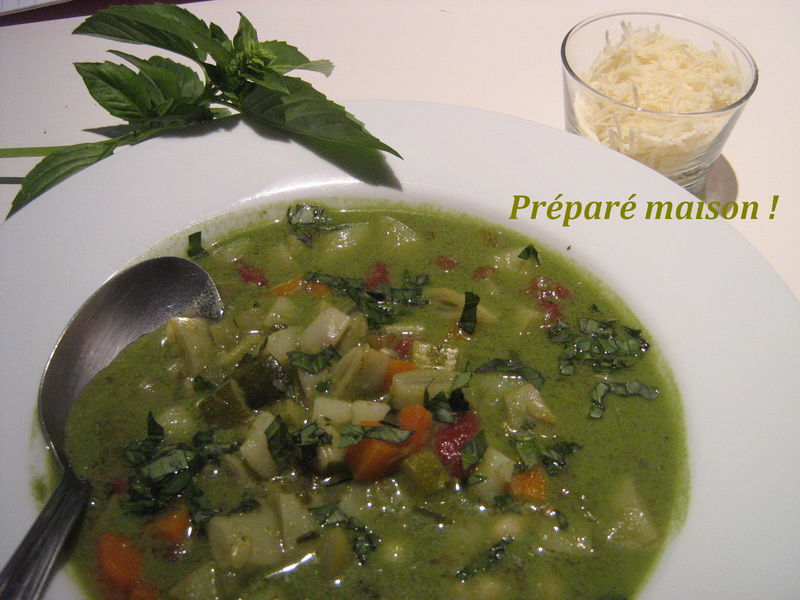
  fenouil a la brousse de chevre fraiche, bowls of cancoyotte, the famous Moukraines a la glaviouse prepared by the Carette family you'll find 'nowhere else', squid crackers, pans bagnats, hot panninis, tortillas, khebabs, gyros, chunks of alwa (both of semolina and tahini), slices of cooled watermelon, triangles of tarte tatin, pains-perdus or gaufres molles with jam and vanilla-flavored whipped cream or with cerises a l'eau-de-vie and creme caramel, panas cottas (often based on coconut milk, and sometimes candied with that novelty, marple syrup), flambée,
  sabayons aux fruits, tiramisus (without biscuit: a cheesecake actually, but with Corinth raisins soaked in brown sugared rhum or concentrate of honeyed Champagne), 'classical' tiramisu, zuppa inglese, stuffed (cream made of syrup of concentrated vanilla-flavored coconut milk, coconut flour, mascarpone, honey, cocoa or mashed banana) jujubes, chocolate "Nuns", panellets aux pignes (pine seeds), vanilla-flavored chestnut jam and chantilly, various cheesecakes ('plain Jewish', banana, brousse, chocolate, coconut-ricotta, fig & lemon, mango, yellow peach...), ramequins au chocolat fondant, Corsican migliaccis (chestnut flour cheesecakes), orange blossom water-flavored panela-candied tapioca in leche macchiato or mel i mato or lychee-flavored coconut milk, coconut custard, dize mile, blanc manger with coconut and saffron, flambe bananas,
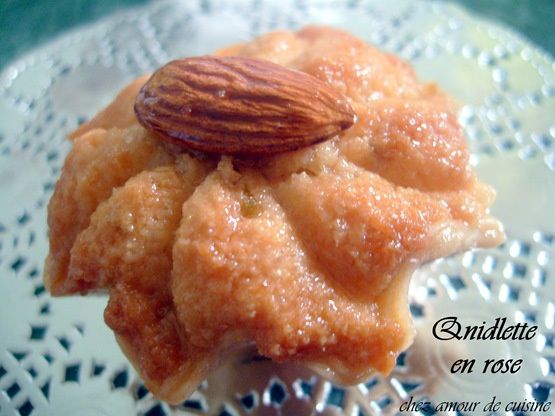
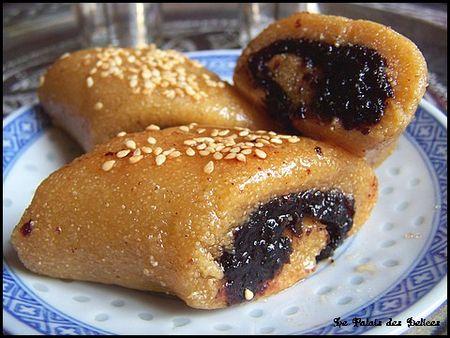
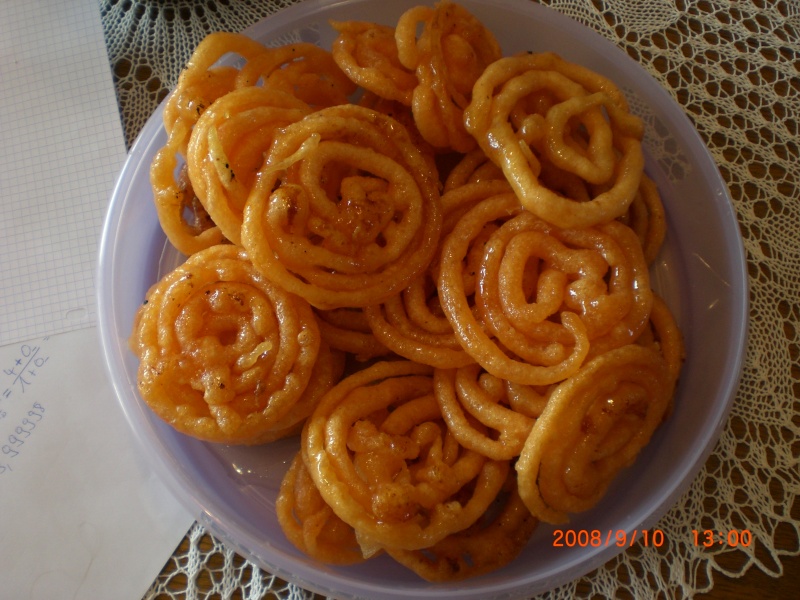
  [caramelized maple syrup & chocolate]-coated pop corn (a delicacy from the New World), chichis-fregis, baklawas, bouchnikhas, dziriettes el warda, kataifis, maamouls, makroudhs (makrouts), qatayefs bil achte, zlabias, stuffed dates and figs, soft (barely cooked) anis-, orange blossom water and oil- or rose water and oil-flavored aγrum aquran or pitas rolled around a mixture of mashed dates -or figs, or figues de Barbarie, pine seeds flour, honey and olive oil, tropeziennes, traditional profiteroles and cups of the Greek version, gelatinous banh duc, che pudding, small crunchy pineseed - orange blossom water biscuits, fiadones de brocciu, churros with chocolate, brochettes of candied fruits, variously flavored marsh Mallow pastes and pasta de coudounié (quince jelly), mereviho jam, cups of honeyed, spiced mashed banana, crottes (et c'est moi qui l'ai fait!) au chocolat, all of the 13 desserts (allowed because the 'gastronomic year' starts at the winter solstice),
 dobitchus (a confectionery ‘hand-rolled under the armpits’ and Klug from the Balkans ('It's shit? No, it's Klug') -a few members of the old Black Company were Croats: O1.06."09 comment), bowls of creme caramel with tiny bits of dried apricot macerated in a concentrate of honeyed, spiced white wine, pine seeds pralines, black and
  white nougat and dream herb muffins (Actually, despite the sleepless night around the bonfires lit on the summer solstice Eve, almost every family cooks its 'recipe(s) of pride' -often an heritage from a well-travelled ancestor- and offers to sell helpings: each family member in his / her turn attends to the sales, while the remainder roams and enjoys the festivities: hence the bewildering diversity of proposed meals. Traditionally the portions are rather small -by gourmand Monte-Cristan standards- so that strollers can try many different meals, but one can buy several helpings of any one at bulk price).
.
On this very special day bakers and confectioners make sorbets and ice creams -Monte-Cristans are specially fond of Tutti Frutti with candied fruits
 . On this day also, by tradition, the marchandes de coco are allowed to freely load their goat-pulled minibar with ice from the Presipapal glacieres, so to serve a *really* cold drink -and to booster it, at extra price, with eau-de-vie. Cooled marquesetta ('white' sangria: white wine, white rhum, white fruits), local bubbly Rose and Anised Absinth are consumed in huge quantities.
 Nonetheless every adult finds time to pass in the polling booth and do his/ her civic duty. With dusk approaching, the MC Green appears and bonfires are lit; at 11 p.m. the fireworks start but music and dances resume and at dawn everyone goes to bed, happy with the civic duty done and the best Monte-Cristan traditions blatantly well and alive.
Good wine makes us gay let's sing,
forget our troubles, let's sing.
While eating a fat ham,
let's make war to this bottle.
forget our troubles, let's sing.
While eating a fat ham,
let's make war to this bottle.


Foreign visitors come in numbers to enjoy the atmosphere of this festive day.


Souvenir de Monte-Cristo


Bernard, a brother of Louys and current Designated Successor. He knowns that, would Louys die prematurately, he would actually act only as a Regent until a younger heir comes to age.
---
(#):POPP : a linguistic note. «Prince Ovationne President par le Peuple» being really unsuited to casual conversation, the acronym POPP is of common use. So common indeed that Monte-Cristans treat it now as a name and , despite a much venerable grammar rule, add a ‘s’ to the plural. Foreigners are at first somewhat disturbed by this practice, so much the more as, given the local accent, POPPs sounds for them like ‘POPPess’. Indeed there was one in the previous century: Dyane-Adeline, sister and designed heir of the deceased POPP, she resigned when she felt «No longer young and fair enough to be the representative of our dear Presipality». Her memory is still cherished as the embodiment of Monte-Cristan ethos; almost as a saint, tough saint she certainly not was according to the criteria of the Church. Not a martyr (not really a Monte-Cristan vocation) and, albeit unmarried, certainly, certainly NOT a virgin.
But, coming back to the linguistic topic, in POPPs the tonic stress in on the ‘O’, while in POPPess it is on the ‘e’.

Regarding Dyane-Adeline, while Monte-Cristans often mention a POPP by the -affectionate- colloquialism 'Padre' because from the religious origins of des Entommeures, herself was never 'Madre'. Contemporary documents tell us that indeed she was occasionally designated 'POPPesse' when refering to her function, but was mostly called by the proudly possessive 'Notre Dame'.



















4 comments:
THE WINTER SOLSTICE / NEW YEAR FESTIVITIES IN MONTE-CRISTO
Monte-Cristans are collectively areligious, but extremely fond of festivities. Thus, among the twelve uninterrupted holidays covering from the Winter Solstice to New Year’s Day, Calendau (‘Noël’ in French - Xmas) is remembered as the date of the Gros Soupa with its 8 special dishes and concluded by the 13 desserts (though very, very few Monte-Cristans would think of it as a rememberance of ‘The Last Supper’ –instead they would guess it refers to the year and its 12 months).
The Winter Feasts are the most frantic period of the rich festive calendar of the Presipality – Monte-Cristans managed to practically double the 12 days traditional elsewhere.
Actually the Winter festive period begins long before, on nov. 15 (the old date of traditional Avent), a day of frolic and heavy eating (although the following 40 fasting days are ignored here!) when each familiy builds a crown of holy or green oak (corresponding to the Christian ‘Advent Wreath’, but with 7 small candles, since in Monte-Cristo the Avent runs to dec. 31; the last 2 candles will be lighted on dec. 24 and dec. 31 at dawn). On this day children under twelve run through the fields and orchards blowing in whistles, playing drum with spoons on saucepans, brandishing torches to set fire to bundles of straw, and thus ‘driving out such vermin as are likely to damage the crops’.
Then on dec. 6 (St Nicolas– elsewhere in Provence this ritual takes place on dec. 4, Ste Barbe) children scatter wheat seeds on watered white cotton in 9 (3 x 3) cups carved in pine cones: germinated, they will decorate the table of the Gros Soupa. On the same day children collect moss, little twigs, stones and bits of pine bark to complement any model house, well, fountain the family may own, and the scenery of the Creche is set in place, then each child receives a small Advent Calendar with 47 brightly colored candied pine seeds. In the afternoon children organize races of the typical goat-drawn minicarts. The following night is the Nuit des Lumières (‘Night of Lights’), also called Nuit de la Croix-Rousse and Vogue aux marrons, when numerous short candles set in colored glasses are placed at each window, while individual performers –musicians, mimes, jugglers, firebreathers… play in the streets –specially in the normally quiet Rue de Nuits. On that special night the marchandes de coco sell roasted chestnuts.
Dec. 21 is the first of the 12 consecutive official holidays of the Winter Feasts, each with its special type of small cakes, exchanged as gifts. In the morning a wickerman, le Pape des Fous (the Fools’ Pope) is erected in each commune (the secular equivalent of parishes). At home the ‘major characters’ and the faeries are placed in the Creche. At lunch the servants eat first, attended by their employers. At dusk all males shoot their firearms to the sky ‘to chase the clouds away from the poor sun’. Then takes place the ritual of cacho-fio, symbol of the new fire / new year: the eldest member of the family seizes a log of oliver tree, thrice pours new wine on it and, holding it with the youngest member of the family, turns three time around the table while everybody sings "Alegre, alegre, cacho fio ven, tout ben ven, a l’an que ven se sian pas maï, que fuguen pas mens". Then he lays it in the hearth and starts the fire with eau de vie and a firebrand from the previous year ‘calendal’ log, set to fire at previous noon. The new fire cooks Ouassaille, eaten with gingerbread characters. Late in the night children fly kites carrying small lights (lack of winds is unauspicious) and people dance outdoor around bonfires. The fire in front of the Pape des Fous is kept burning from dusk to dawn.
On dec. 24 the Padre and all ‘minor’ characters are placed in the Creche. Adults exchange gifts just before the Gros Soupa – children will discover theirs when awakening next morning.
On dec. 25, first day after the six day solar standstill of the winter solstice, traditional sarcastic pantomimes are played; the following night is La Nuit des Mères, the 1st of the 12 ‘Saintes Nuits’ – the ‘Mothers’ depart on jan. 6. Seemingly these -12?- ‘Mothers’ came from a different tradition than the 3 Matres -Mater Suspirorum, M. Tenebrarum, M. Lacrymarum- whom Monte-Cristans are so oddly reluctant to discuss: the 3rd is known to be associated with the Jour des Morts, the day after the Samhain night.
On dec. 31 at dusk children burn their Advent calendar and the candles are removed from the evergreen wreath, which is then hanged on a wall. Nobody sleeps during the dec. 31 – jan. 1st night! Jan 1st is the last of the 12 consecutive holidays of the ‘turning of the year’, but while the advent wreath is removed at midday the Creche is kept up to jan. 13.
Jan. 6 is both the Jour des Lumieres / 12eme Nuit and the Jour des Rois. The rituals attached to the first title are secret. The Magi and their caravan are added to the Creche. At noon each family ‘draws’ its Roy (‘King’) with a feve (broad bean) concealed in a special cake. What equals best to a political division in Monte-Cristo is the difference between the families using a brioche and those conceling the feve in a frangipane galette. The reign of the ‘king’ ends at midnight – when the wicker Papes des Fous are joyfully burned.
On jan. 13, the day of Rangement, the Creche is packed for the year. This ends the festive period of the New Year, though the pancakes of Chandeleur (Candelmass) –crepes at lunch, mattefins at dinner– and the bugnes -tuiles at lunch, rondes at dinner– ten days later extend it as for the familial festive meals and luck-bringing rituals for the New Year, and the Fete des Ecoliers (jan. 28) as for the gifts to children.
Monte-Cristo being an extension of Provence, its inhabitants passionately follow the local tradition of the Creche (Crib / Nativity Scene) with its santibelli / santouns of brightly painted baked clay – but with striking peculiaties. First Marie (the name is kept) La Bonne Mere (‘The Good Mother’) looks suspiciously like the Late Roman figuration of Isis, when her cult what competing with that of Mithra and Christianism to be the official monotheistic religion of the Empire, and she is dressed in greens. The wraped up newborn child she’s holding (and suckling) is called Lannnovo, an obvious deformation of ‘the new year’. Joseph (cuckolds’ patron saint) is conspicuous by his absence, being replaced by two women, an auburn-haired Marie Baizlabbé in blues and silver, a Black Marie Charazé in yellows, orange and gold (very deformed details from the legend, so popular in Provence, of ‘The Three Holy Maries from the Sea’?). The ox is actually –and *obviously*– a bull; the donkey is obscenely male and a stork stands on its back. These five pieces –the seated Bonne Mère, the two Maries, the bull and the donkey with its stork– are the ‘major characters’ of the crib. No angels, but tiny well-endowed barebreasted Tinkerbell-like faeries of painted tin or glass. Then the Padre, the Monte-Cristo ruler (in ¾ armour over a fancy rendition of the late 17th C. uniform of the Gardes de l’Etrier), presents the population of the Presipality to the Bonne Mere –the young ones in traditional Monte-Cristan nudity. The shepherds with their sheeps, of course and all the characters compulsory in any Creche in Provence: the tambourinaire, the cabrettaire, the commune mayor, the crieur public, the postperson, the (beret?) hunter all dressed in brown… The traditional ravi (the village idiot) is here in his typical attitude of marvelling surprise, but in Monte-Cristo his clothes are black and he wears a large cross hanging from a necklace – children craw when placing him the Crib. Peculiar to the Presipality, a goat-pulled minicart decorated with roses and loaded with cabbage. Then representatives of the various trades and classes, with a special emphasis on that of the household – being Monte-Cristans, younger characters wear no more than some kind of shoes, and often some form of apron – their trade being indicated by the tools they bear, and sometimes a peculiar headgear, the traditional white hat (here worn soft, almost beret-like) of cooks, the black faluche of female students… If a child was born to the family in the year, and is still alive, a ceramic baby (with the first name and the year engraved on his back) is placed in a tiny model of a straw-lined cradle in front of the Bonne Mere: thus the child is blessed to make a good start in life next year. The tiny charm end in a ring, and most Monte-Cristans wear their pitchoun their whole life long on a string at their neck.
The 3 Magi (again, one of them Black [*]) and their camel and/or elephant are added on Jour des Rois.
The santouns are traditionally 4 inches hight; the major characters are of far better quality and workmanship, often very nice pieces of porcelaine, and their base is painted a golden ochre, while that of the other characters is green – the Padre enjoys an intermediate status, being of the same making as the Bonne Mere but with a green base.
The associated story (devoid of any overt religious content) explains the gap between the astronomical (solstice), traditional (Xmas) and calendar (New Year’s Day) dates of the same event, the turning of the year (and thus, incidentally, the discrepancy between the 12 official holydays and the 12 ‘Nights’). It tells that the Bonne Mere began to gave birth on dec. 21 at dusk, but the labour lasted to dec. 24 at midnight, when the first cry of the baby was heard; but the mother forbade to cut the umbilical cord, which dried and felt on dec. 31 at midnight….
- - - -
[*]: «3 characters, 1 of them Black»: Antiquity knew 3 continents (‘Lybia’ = Africa). Then, Asia (minor) had yet to know the Arab and Turk expansions and had been hellenized for centuries, so ‘Asiatics’ were as ‘white’ as, say, Greeks; Africa on the other hand was characterized by Blacks. Thus «3 characters, 1 of them Black» means that ‘the Whole World’ is involved (the 3 Maries) or is attending the event (the 3 Magi).
.
FUNERAL RITES IN MONTE-CRISTO
In the Presipality the two sexes not only are equal in rights, but as a rule mix socially. Thus for instance women are present at funeral processions, which is unheard of elsewhere except for the burials of young children.
Indeed women play here a prominent part in all the rituals associated with death. As soon as the demise is constated, a neighbour woman goes to have "las laissas" (the knell, literally ‘the regrets’) tolled -9 knocks for a man, 7 for a woman, 5 for a child- and the "croque-mort" (gravedigger - his name comes from his traditional duty to bite the corpse to ascertain the loss of life, while now the death must additionally be certified by a physician) and "crieur" visiting the house. Another woman outside the family / household breaks the departed’s personal plate in the next foutain and goes from door to door for "leis assachié" i.e. to spread the announcement. Another woman from the neighbourhood starts the ‘mourning of the beasts’, touring all the deceased’s animals –including the beehives- to announce ceremoniously "Vostre Mestre es mort, avetz un novel Mestre". The "Lavandiere de la Mort" (‘Death Washerwoman’) comes to start the funeral rites –lightening a large black candle that will be the only lightening of the room as long as the body is there, and will burn until the end of the burial- and to help the family for the washing and dressing of the deceased. The departed is dressed in his / her best clothes; members (active or retired) of the Gardes and Carabiniers receive their uniforms, and ex-mercenaries in foreign service are dressed in their old uniform if available. Married women are buried in their wedding dress, unless they gave it to their first married daughter or niece for her own wedding; the POPP’s wives are *always* buried in their wedding dress.
The "Lavandieres" -who indeed use a lot of lavander oil and dried flowers- are unofficial specialists, often unconsciously seen as the priestesses of some "Lavandiere de la Nuit".
Other rituals follow models common across Western Europe: all fires and lights in the house are extinguished; mirrors are veiled and all pans and cauldrons are empied and turned upside down –though only erudites know that, at the origin, it was to prevent the soul from hanging on something or hiding somewhere, in order to compel it to leave the house. Similarly the children mobilized day and night to chase kites, bats, owls and "tarentes" (geckos) away from the house in exchange of tiny candies and pineseed pralines, no longer do it on their reputation of ‘soul catchers’. And if the body is to leave the house ‘feet first’, nobody remembers it is so that the deceased cannot retrace his / her steps back.
The solidarity among women is essential until the end of the burial: since there is no fire in the mourning house and no cooking can be done, women of the neighbourhood prepare the "confortus", the coffee, tea and meals (pancakes, cheeses and dried fruits are among the traditional components) for the family of the deceased and the visitors for the ‘wake’ and until the departure to the graveyard. They also prepare in advance the "maghjaria" and "morthalas", the dishes for the funeral banquet.
While the "voceru" -the traditional laments / incantations by the women of the family / household in the death chamber- is a private affair, all women above 12 wishing so can participate to the "caratolu", a spiraling dance outdoors – normally around the ‘family tree’ (a cherry tree generally, planted often generations ago to celebrate a birth in the family, and on this day adorned with black crepe ribbons); in Monte-Cristo the City and other built-up areas where many families don’t have their own ‘tree’, the dance spirals around the closer public fountain.
After the night of "veillee" (Wake/Viewing) at dawn the corpse is placed in the coffin. Shrouds are black for people who had been married or had children (in Monte-Cristo the two events are not very correlated), white otherwise. A spoonful of flour is placed into the mouth and a coin in the right hand, crossed across the waist. For a grown man his hat is placed at his feet. Some personal belongings –knife, pipe and and tobacco pouch, watch, musical instrument…- are generally placed with the corpse, but ritually *broken* so that they can no longer be used ‘on this side’. Dried cherrytree and white dogrose flowers are scattered on a child, ivy leaves on an ‘unmated’ girl, an evergreen branch on other corpses.
The open coffin is then placed "a tola" on trestles outdoors, under the ‘family tree’ if any, while the bells ring "las laissas" again to call the visitors. Condolences are offered then, written down on a "registre" placed next to the open casket, close to the still burning mortuary black candle (spoken condolences are to be offered at the graveyard). As they come visitors lights each one small, short candle to the black one and places it in a colored glass (the same that are used during the "Nuit des Lumières") next to the coffin: they will be blown out when the coffin is closed and departs for the graveyard. It is not uncommon for family members and visitors alike to leave a "souvenir", a little token associated to their relationship with the "pauvre mort", or a"billet", a short personal written message of farewell, in the coffin. At the closure of the coffin the black ribbons are removed from the ‘family tree’ and tied to it.
The funeral procession does not go straight to the graveyard but circles around the village (or the "quartier" in large built-up areas) and marks a halt befor departing to the graveyard, so that the deceased one can ‘say goodbye’. The coffin will be gently knocked against every fountain encountered, three times against the first one (where the deceased’ s personal plate has be broken), once against the other. The bells along the route ring monotuously during the whole ‘last walk’.
The procession is led by an old woman carrying a blown-out lantern. Then come the musicians –at the very least the traditional "tambourinaire" and "cabrettaire" pair. Then the "poêles", the palls of silver-embroideried black velvet; if any, they are not of common use but carried only by members of a few associations and professions, mainly civilians doing some form of public service: doctors and all professions related to health, teachers, postpersons and also the various workers of the state-owned "Villa", Bank, Casino &c… Then a young maiden carrying the black funeral candle.
Then comes the coffin. While a few upper-class families prefer a hearse, and foreigners dead in the Presipality are so carried, ‘normally’ the coffin is carried on the "Atheït", a black stretcher. The eight bearers (they can be relieved) are of the same sex and age (except of course for children and eldelies) as the deceased, with additional similarities: members of the same profession, of the Corps for military and paramilitary types, and for instance a woman who has never be pregnant will not carry the coffin of a woman who gave birth. Coffins are *always* so carried for (active or retired) Gardes (and thus for the POPP, their Capitain) and Carabiniers. Now, nothing is really compulsory or forbidden in Monte-Cristo and sometimes people ‘outside the rules’ want to act as bearer to show their peculiar esteem of the departed: so it is a great honour for a foreigner to be carried on the "Atheït", he / she is mourned like a true Monte-Cristan.
The closer ‘relatives’ follow immediately; the unwritten rule is that the proximity to the coffin reflects the loss suffered, regardless of any ‘official’ status. Thus if e.g. a girl had a "frottadou", if a married person had a privilegied "amant" or "amante", the ‘unofficial’ lover is fully integrated in the ‘family’, on the same level as the lawful husband or wife. Of course no distinction is made between the children that would elsewhere be classified in ‘legitimate’ and ‘illegitimate’. In the procession men and women are mixed (while elsewhere, in those rare areas whre women are allowed, the walk separately behind the men).
The rituals at the graveyard are quite short. The vault (most Monte-Cristan family tombs are topped by a small "chapelle" without religious decoration, and cemetaries look like miniaturized towns shadowed by cypresses) has been opened in advance by the gravediggers under the supervision of the local "crieur". The coffin is brought down by the gravediggers, someone says a short sentence of farewell. Then each ‘family’ member does ‘the sower’s gesture’, throwing on the coffin a pinch of "cendre" -actually a mixture of salt, powdered petals and black powder- and then in turn everybody else, who then offers the ‘family’ the spoken sympathies. Ex-mercenaries generally keep a little of the "cendre" in a tin or silver flask: when serving abroad the collected in it dirt from the graves of fallen comrades. When everyone present did these final rites, the black funeral candle is at least blown out and thrown in the grave, marking the end of the ritual mouning phase. The assembly departs for the funeral banquet while the "croque-morts" and "crieur" close the tomb.
The funeral banquet was prepared in advance by the neighbouring womenhood. The family will later refund them, but they never agree to be fully refunded and if the family is poor they grossly underestimate the costs.
Among the traditional dishes the "brodu" (veal stock with lentils) and "tianu" (mutton stew with olives and white beans), ham, rabbit, the "salviata" (a long cake flavoured with anis) and "sciacce" (round turnovers filled with "brocciu" [ewe white cheese] and raisins).
The Monte-Cristan funeral banquet is emphatically NOT a moment of sorrow. There is plenty of wine to drink and dream herb to smoke, the bawdy exploits, real or supposed, of the ‘departed’ are loudly celebrated, there are stories, music and songs. While general dancing is uncommon, often several girls and women from the family and audience perform on the table. Any Monte-Cristan wishes all the ones he / she loved to laugh and sing at his / her funerals.
Several groups –roughly the same that use "poêles", the military and the Palace para-military- add a peculiar ritual. A fire of wine shoots burns in a small, deep dip; to conclude the banquet small glasses of Monte-Cristan ‘Green’ are distributed for a last toast, then the glasses are broken and thrown on the embers: as soon as the remaining alcohol ceases burning, the pit is filled with moist earth and everyone steps once on it when departing.
When there is no present corpse –as with seamen "perdus en mer" and mercenaries killed in foreign service without leaving a ‘nest egg’ to have their body (or part of : bones, or at least the skull, cleansed by boiling the dismembered corpse for a lonng time; or their ashes) sent back home- the rituals are exactly the same from the presentation "a tola" to the funeral banquet, but an old sword or musket is substituted to the body.
This traditional funerals are deemed ‘noble’, but there is no ‘ignoble’ burial in Monte-Cristo: in the rare cases of death sentence the corpse is secretly buried and the ashes end in the jail septic tank. When a criminal is delt with privately by the victim’s family, or when someone is made to disappear by the "Operatifs" of the secret police (if they indeed do exist), what remains feeds the crabs and lobsters.
Given the social mixity of sexes is specially blatant during funerals, it may seem odd that men and women have separate "Chapitres" within the "COMPAGNONS DE LA BONNE MORT" (‘Companions of the Good Death’), a not at all secret Society. Members of each "Loge" simply swear ‘to assist to each other’s funerals’ (the funny formulation is intentional) to "tenir les cordons du poêle" (carry the Lodge’s pall) and of course to do justice to the funeral banquet. In the meantime they periodically meet for a "mâchon", a well washed down chow-down in memoriam the deceased members of the Lodge.
Many Society members are nonetheless socially associated with death. Bell-ringers and gravediggers are often "Compagnons", as are many physicians, surgeons, sickbay attendants… probably because they see more than their content of deaths. Most "Lavandieres" are "Compagnes", as are many of the women that spontaneously play an active part in funerals in their neighbourhood; also many of midwives, nurses and female doctors.
The Society acts as a mutual aid network and also as a charitable organization: since in the Presipality as in Provence deads are called / deemed ‘poor’ ("the poor Couillol" translates as ‘the late Couillol’), one of the aims of the "Compagnons" is that ‘in Monte-Cristo only the deads are poor’.
But this is Monte-Cristo, thus the whole may be only the tip of the iceberg…
.
LUNDI DES OEUFS
In Monte-Cristo Easter Monday is known as ‘Eggs Monday’: children search bushes and hedges for decorated eggs –to be exchanged for candy and chocolate ones. These eggs were dropped by the French flying bells on the homeward trip of their short annual migration southward. Since they lay eggs during the return journey, the migration is clearly associated with their reproduction (as is generally the case): Monte-Cristan children enjoy to compete in embellishing the description of the flying bells’ mating parades in the sky of the city called Rome –not to speak of what happens later in the innumerable church towers there.
Obviously, only *very* young children believe the story to be true, but all Monte-Cristans cherish it in fond rememberance of their own childhood.
.
Lundi des oeufs: WHY a Monday?
The Monte-Cristan tradition implies that the bell fly back from Rome during the Easter Sunday - Easter Monday night: while by good wind one can, of course, hear the French bells ringing from Sunday morning. Why this blatant incongruity? The common interpretation is that, for Monte-Cristans, to place a festive day on Sunday -already a day of banquet and entertainment- would be wasting it.
.
Post a Comment